Why a Jacket’s Lining Changes the Way It Moves
A jacket lining affects movement and how easily it passes over clothes. Learn to spot snags, pulling and bunching, and decide when a tailor should inspect it.
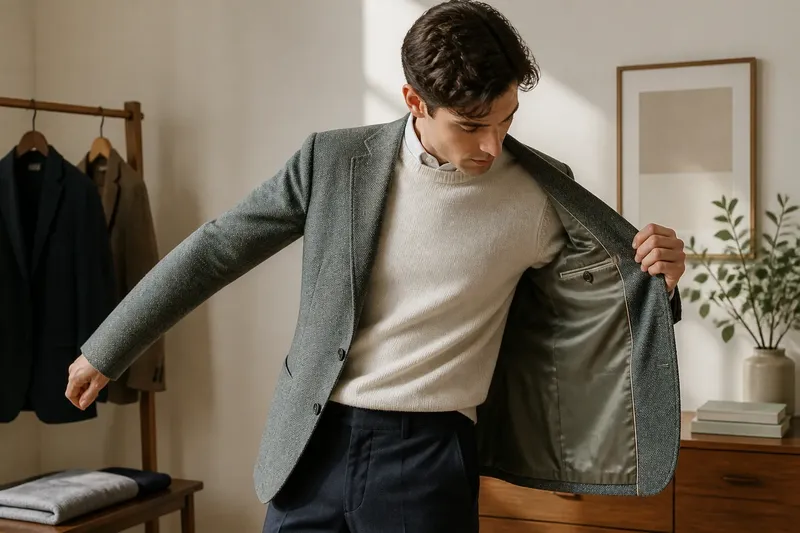
A jacket lining can make the same outer cloth feel easy to put on or awkward to wear. A well-matched jacket lining helps the inside slide over a shirt or knit, while its cut and attachment affect how the garment follows your arms and torso. Looking at the lining can help explain why a jacket pulls, catches or feels bulky.
A lining manages friction as well as finish
The lining is the layer sewn inside a jacket, usually covering some or most of its seams. It creates a smoother surface and can conceal seam allowances, interfacing and other construction details. Its fabric, shape and attachment all affect how the jacket behaves over the clothes beneath it.
A shirt sleeve and a jacket sleeve can grip one another, particularly when both fabrics are brushed, textured or knitted. A smooth lining between them reduces that friction, so the jacket sleeve can shift as your arm bends instead of tugging the shirt along with it. You may notice this when putting the jacket on, reaching forward or taking it off.
Smoothness alone does not make a lining successful. If it is too narrow, too short or attached under tension, it may restrict movement. If it is excessively loose, it can bunch into folds. The useful question is whether the lining has enough room and is arranged to work with the outer shell.
The jacket rides up when you reach forward
A jacket that lifts at the back or shoulders when you reach for a shelf may have a lining that pulls against your shirt. The lining across the back needs enough ease to accommodate your shoulder blades moving forward. A taut panel can limit how far the jacket follows your arms.
Check what happens with your usual base layer rather than judging the jacket over bare arms. Reach forward, then relax. If the outer jacket settles slowly or stays bunched, inspect the back lining for tight horizontal creases. The sleeves, armholes or overall fit can also restrict movement, so the lining is a clue rather than a verdict.
Try the same movement with a thinner shirt or a less bulky knit. If the pulling eases, the combination of layers may be the issue; if it remains, compare the jacket’s behaviour with another similar garment that feels comfortable. A tailor can assess whether the lining or the jacket’s underlying fit is responsible. Altering the lining alone will not correct a poorly balanced jacket.
The sleeve catches on a shirt or jumper
When a jacket sleeve stops partway as you put it on, the inner surface may be catching on the layer beneath. This can happen with textured knits, brushed flannel or a shirt cuff that has twisted inside the sleeve. A slick, even lining can help the jacket pass over these fabrics, while a rough seam or snagged area can interrupt that movement.
First, straighten the shirt sleeve and check that the cuff is not folded back on itself. Then put the jacket on without forcing your arm through. If one sleeve repeatedly catches at the same point, look for a pulled thread, rough seam or damaged lining. Avoid tugging at loose threads: a small snag can spread, and force may stress the seam joining the lining to the sleeve.
Say you wear a textured wool jumper under a lined blazer and the right sleeve keeps stopping near the elbow. Straightening the jumper sleeve may let it slide into place; if the snag still occurs in the same spot, the lining seam or fabric may need a repairer’s attention. This helps distinguish a twisted layer from a jacket problem, without treating either explanation as certain after one attempt.
The inside feels bulky or gathers at the hem
Extra fabric inside a jacket can collect around the waist or hem, especially when you sit, bend or wear a long shirt beneath it. Some movement in a lining is normal: it needs room to shift as the outer cloth moves. A tight lining can pull the shell out of shape, while a lining that is badly gathered or much longer than intended can feel uncomfortable and make the hem sit unevenly.
Look at the jacket while it hangs open, then notice what changes when you fasten it and sit. If folds appear only over a thick layer, try a smoother or thinner underlayer and see whether the gathering reduces. If the lining forms a fixed lump or repeatedly slips below the outer hem, its attachment may need repair. Do not trim it yourself; the lining’s length and joins help control how it hangs.
Some jackets have a full lining, while others are partially lined or unlined. A full lining covers more of the interior and provides a continuous surface over the body and sleeves. Partial linings leave selected areas open, reducing interior coverage and revealing more of the jacket’s construction. Neither format is automatically better; consider which areas need to slide over your clothes and how much interior finish you prefer.
Shoulder seams or vents show through the lining?
What is the small fold at the back for?
A fold of extra lining at the centre back, often called an ease pleat, gives the upper back room to move. It should lie quietly when you stand and open as your shoulders move forward. If it is sewn flat or feels tight, the jacket may pull across the upper back, though the jacket’s cut can contribute too.
Why is the lining not sewn tightly to the shell?
The lining and outer fabric may move differently, so a little freedom at the hem or vents lets them shift without dragging each other. A loose edge is not necessarily a fault if the jacket is designed that way. Repeated twisting, visible pulling or a lining that escapes beyond the shell can point to a worn or displaced attachment; a tailor can inspect the join and advise whether it needs repair.
Does a smoother lining always work better?
A smooth finish often helps a jacket pass over shirts and knitwear, but cut and placement matter just as much. A slick lining that is too tight can still restrict the shoulders, while an uneven seam can catch on clothing. Judge it by how the jacket moves over the layers you actually wear.
What should you check before choosing or altering a jacket?
- Test your usual layers. Put the jacket over the shirt or knit you expect to wear with it, then reach forward and bend your arms. If the lining slides and the shell settles, the combination appears to move comfortably; if it pulls, try a less bulky layer or ask a tailor to inspect the fit.
- Check both sleeves. Put the jacket on and remove it without yanking. If both sleeves move freely, no change may be needed; if one catches, straighten the cuff and try again, then seek repair if it repeatedly snags at the same point.
- Watch the back panel. Look for taut horizontal folds as your arms move. If the back stays smooth, the lining is not visibly restricting that movement; if folds appear and persist, compare a thinner layer and consult a tailor if the pulling remains.
- Inspect the hem and vents. Observe whether the lining stays inside the shell while you walk and sit. If it hangs evenly, leave it as it is; if it twists, gathers persistently or slips out, ask a repairer to inspect its attachment.
- Match the jacket to its use. Try it over the clothes you expect to wear most often. If it moves comfortably over those layers, it suits that combination; if it feels tight over a substantial jumper, try a roomier jacket or plan to wear a thinner layer.
- Ask before altering. Check for pulling, tears or an uneven hem while wearing the jacket and moving normally. If the lining is intact and comfortable, alteration may be unnecessary; if it pulls, is torn or hangs unevenly, have a tailor inspect the construction before choosing a repair.
Imagine you are choosing between two blazers for a textured wool jumper. The starting point is the same jumper, a shirt beneath it and both blazers tried on in turn. In the first blazer, a sleeve catches until you straighten the shirt cuff; after that, it slides into place, so the cuff was likely part of the problem. In the second, the sleeve still catches at the same seam and the back pulls when you reach forward. The observable difference suggests the second blazer needs closer inspection; you might choose the first for that layering combination or ask a tailor to assess the second before deciding.
For care, follow the garment label and the maker’s instructions. Lining fibres and construction vary, and an unsuitable cleaning method can affect how the inner layer sits.
Choose a lining by how you intend to wear the jacket
A lining is part of a jacket’s fit in motion, not merely an attractive interior. When comparing jackets, try them over the layers you will actually wear, move your arms and notice whether the shell settles without dragging. If a jacket catches or pulls, consider the possible causes: the underlayer may be twisted, the lining may be damaged or tight, or the outer cut may be limiting movement.
That simple observation makes a jacket lining easier to assess. Its finish, ease and attachment help explain why two jackets with similar exteriors can feel quite different once worn. If a loose edge or persistent pull leaves you uncertain, a tailor can identify whether the lining is designed to move freely or needs repair.