Linen, Twill or Jersey: Three Different Kinds of Drape
Linen, twill or jersey drape changes a garment’s silhouette; learn how each fabric falls and moves so you can choose the shape that suits you.
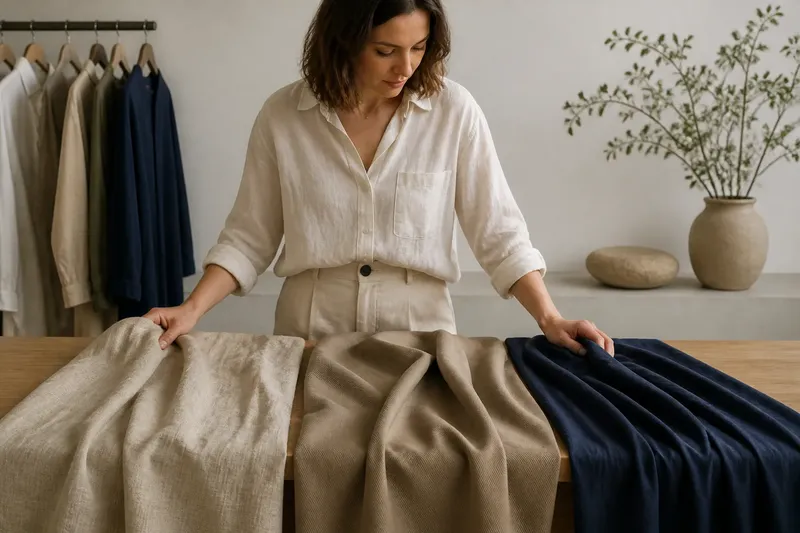
Linen, twill or jersey drape changes the outline of a garment before you add a belt, jacket or accessory. Linen tends to hold a loose, broken shape; twill usually falls in steadier folds; jersey follows the body and swings with it. Choosing between them is less about naming a “best” fabric than deciding how much structure, movement and contact with the body you want to see.
Drape describes how cloth hangs under its own weight and responds when it moves. It comes from several qualities working together: fibre, yarn, weave or knit, fabric weight and finish. The names linen, twill and jersey do not describe three perfectly uniform materials. Linen identifies a fibre, twill a weave, and jersey a knitted structure, so one linen cloth can behave differently from another, as can two twills or two jerseys.
Choose linen when the silhouette should keep a little air
Linen is made from flax fibre, and many linen fabrics have a crisp hand with a tendency to crease. In a loose shirt, wide-leg trouser or unlined summer dress, that crispness can keep cloth from clinging closely to the body. Instead of tracing every contour, it often forms angular folds and a relaxed outline with a little space between fabric and skin.
This makes linen a strong choice when you want a garment to look easy without appearing limp. A roomy linen shirt can stand slightly away from the shoulders and settle into soft, irregular creases at the waist. A linen skirt with enough fullness can swing as you walk while retaining a clear edge. The result is movement with visible texture rather than a smooth, close-fitting line.
Choose linen for warm-weather clothes, roomy tailoring and silhouettes that benefit from texture. It may be less suitable when you want a pristine, uninterrupted surface: creasing is part of how many linen garments look and behave. Also consider the cloth’s weight and density. A fine linen may feel light but can fall close to the body; a firmer one may hold a more pronounced shape.
Choose twill when you want folds to look composed
Twill is a weave, not a fibre. Its diagonal surface pattern comes from the way yarns pass over and under one another. Cotton, wool and other fibres can be woven as twill, so the fibre and weight still matter. In many familiar garments, though, twill offers a useful middle ground: it can bend into folds without collapsing as readily as a fluid knit.
That balance suits trousers, overshirts, skirts and jackets where you want a visible outline but not a stiff, board-like effect. Cotton chino twill, for instance, often forms relatively broad folds around the hip and knee. A softer wool twill can hang more fluidly, while a heavier or more compact twill may keep a sharper line. The name alone cannot tell you exactly how the garment will fall.
Choose twill when a silhouette should look orderly through ordinary movement. It is useful for a trouser leg that should keep some shape as you sit and stand, or a skirt that should fall in controlled folds rather than cling. If you want a very soft, close drape, a heavy twill may feel too firm; if you want a crisp, architectural line, a light twill may not hold enough shape.
Choose jersey when you want the cloth to follow movement
Jersey is a knitted fabric. Its loops make it stretch and recover more readily than many woven fabrics, although the amount of stretch varies with fibre, construction and finish. In a T-shirt, dress or soft skirt, jersey can follow the body as it bends, then move back with it. The silhouette is often smoother and closer than linen’s, especially when the garment is cut with little ease.
Choose jersey when comfort and fluid movement matter more than a self-supporting outline. A jersey dress can swing and settle around the legs; a fitted top can follow the shoulders and torso without the crisp folds common in linen. A heavier jersey may hang in long, soft lines, while a light one can cling more closely. Stretch does not automatically mean drape: some jerseys feel firm and springy, while others feel soft and flowing.
Jersey can be a poor match for a silhouette that depends on crisp edges or sharply defined folds. A soft knit may round the outline of a pleat or allow a loose sleeve to collapse against the arm. If you want a garment to skim rather than cling, look for a cut with ease and assess the fabric’s weight and surface, not simply its stretch.
Match the fabric to the movement you want
Start with the garment’s intended shape, then ask what you want it to do while you move. The same fabric can look very different in a close-fitting top and a wide skirt, because cut controls how much cloth is free to swing. These broad choices can help narrow the field:
- For airy volume: Begin with linen if you want a loose garment to stand slightly away from the body and show irregular texture.
- For controlled folds: Consider twill if you want trousers or a skirt to keep a composed outline as the body changes position.
- For close, easy movement: Consider jersey if you want the cloth to stretch with the body and settle into soft lines.
- For a fluid but not clingy look: Compare a softer twill with a heavier jersey, then judge how each behaves in the particular cut you want.
- For crisp, clean edges: Look beyond jersey and seek a firmer woven cloth; linen or a compact twill may suit, depending on the garment.
- For textured casualness: Linen can make creases and surface variation part of the silhouette rather than distractions from it.
Imagine you want a loose pair of trousers that looks relaxed but keeps a clear leg shape when you walk. A soft, light jersey might swing freely but settle close to the thigh; a crisp linen might create more visible creases and a less regular outline. A medium-weight cotton twill could be the better starting point if you want controlled folds, though the cut and the particular cloth still decide the final effect.
What should you look for before choosing?
How can you tell whether fabric will cling?
Look at the garment on a hanger and notice whether the fabric hangs in a narrow line or spreads away from itself. If you can handle a sample or garment, let part of it fall over your hand and watch whether it settles close or keeps a little space. Fit and cut still matter, but this gives you a quick sense of the cloth’s own tendency.
Does heavier fabric always hold a stronger shape?
Not necessarily. A heavy jersey can be soft and fluid, while a lighter woven cloth can feel crisp because of its yarns or finish. Treat weight as one clue and pay attention to whether the fabric bends easily, springs back or forms a firm crease.
Which fabric works best for a flowing skirt?
It depends on the kind of flow you want. A jersey skirt can move smoothly and follow the body, while a linen skirt often shows more texture and a looser, broken swing; a soft twill can fall in calmer, more controlled folds.
Can the cut change how a fabric drapes?
Yes. A roomy cut gives cloth space to hang and move, while a close cut brings it against the body. A wide sleeve, gathered waist or straight leg can alter the visible folds even when the fabric stays the same.
Read the cloth as well as its name
When shopping, check the fibre label, touch the fabric if possible and look at the garment in motion rather than relying on a category name. A linen blend may feel softer than a crisp pure linen; a wool twill may flow differently from cotton chino; a jersey with a firm hand may hold a cleaner outline than a very soft knit. Labels and care instructions are set by the maker, so follow them when deciding how a garment should be handled.
If you can try the garment on, notice what happens when you walk, sit and raise your arms. Watch whether folds gather at the waist, whether a sleeve swings or collapses, and whether the fabric returns to its earlier position. Those observations translate “drape” into a visible choice: airy and textured, composed and steady, or soft and body-following.
Linen, twill or jersey drape is most useful as a starting point, not a promise about every garment. Choose linen when you welcome a relaxed, textured outline; twill when you want folds with composure; and jersey when you want cloth to move closely with you. Then judge the specific fabric and cut together, because that pairing creates the silhouette you will actually wear.