Reading the Dress Code on a Wedding Invitation
Read a wedding dress code with confidence by weighing its wording, timing and setting, then choosing an outfit that suits the occasion and feels like you.
A wedding dress code makes more sense when you read it alongside the venue and timing. The phrase on the invitation is a clue to the hosts’ expectations, not a universal uniform: labels such as “formal” and “cocktail attire” can mean different things to different people.
Wedding dress code wording signals a level, not a fixed outfit
A dress code usually indicates how polished the hosts hope guests will look, but its terms are not always used consistently. Read the invitation as a whole, including any notes about the reception, location or activities. If the wording still feels unclear, ask a member of the wedding party or another guest who knows the plans.
White tie generally points to the most ceremonial form of evening dress. Black tie usually signals formal eveningwear, while black tie optional suggests a similarly polished occasion but gives guests more latitude, such as choosing a dark suit instead of traditional black-tie clothing. Hosts may use these terms differently, so the rest of the invitation matters.
Cocktail attire is commonly understood as dressed-up and celebratory, often less ceremonial than black tie. That distinction is a useful starting point rather than a strict rule: a host may set a more formal or relaxed tone, and local customs can affect what the label implies. Formal attire is also broad; it signals polish, while the time, venue and other details help clarify what kind.
Semiformal and smart casual leave more room for interpretation. Semiformal often suggests neat, occasion-ready clothing rather than everyday workwear. Smart casual can mean anything from a relaxed suit to well-chosen separates, depending on the hosts and setting.
Compare the invitation, venue and timing
When an invitation says only “dressy”, “festive” or “come as you are”, use its other clues rather than treating any single detail as decisive.
- Check the venue. If the venue is a formal dining room or grand building, then consider a more polished outfit; if the hosts have clearly planned an informal celebration there, choose the stated relaxed tone instead.
- Check the time. If the event is in the evening and other details suggest formality, then lean towards a dressier choice; if it is a daytime gathering with casual wording, let that wording guide you rather than assuming the time decides.
- Check the activities. If the invitation mentions dancing, a garden or travel between locations, then choose clothing and shoes that allow you to take part; if the event is mainly seated, prioritise comfort while keeping the requested polish.
- Check whether the clues conflict. If the venue looks grand but the invitation says relaxed, then follow the hosts’ wording and make practical adjustments for the venue; if the invitation is vague and the clues remain mixed, ask someone familiar with the plans.
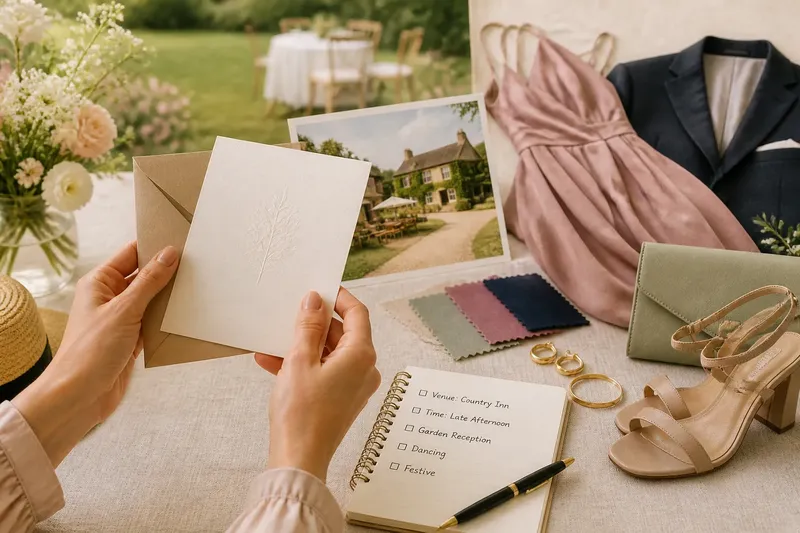
Imagine you receive an invitation to a late-afternoon wedding at a country inn, and “festive” is the only clothing note. You check the venue information and see that part of the reception is in a garden, then choose a polished outfit and shoes you can walk in comfortably. The result is occasion-ready clothing that suits the setting without assuming the hosts expect formal eveningwear.
Adjust for the setting without ignoring the code
Time can help set the mood, while the venue points to practical needs. A city restaurant, garden, beach or place of worship may call for different choices around walking surfaces, weather, seating or coverage. These considerations refine an outfit; they do not replace the stated dress code.
For a garden, consider shoes that will be manageable on grass and a hem that will not drag. At a place of worship, a jacket, shawl or cardigan can provide a useful layer if coverage is expected. For a beach celebration, breathable fabric and stable footwear may be more comfortable than delicate shoes.
If the invitation specifies black tie, a sandy location does not automatically make casual clothing appropriate. Instead, look for formal clothing that works with the setting. If the dress code and practical needs seem difficult to reconcile, ask the hosts or someone helping with the event.
Express personal style at the requested level of polish
Colour, silhouette, texture and accessories let a guest show personal taste without changing the outfit’s overall formality. A sharply cut suit, a softly draped dress or a distinctive jacket can each suit a formal occasion when the finish matches the code. There is rarely a single shape or palette that everyone must follow.
Consider the couple’s preferences if the invitation states any. Do not assume that every wedding has the same colour rules. If a bold choice feels uncertain, a quieter base with a favourite accessory can express your style while keeping the outfit understated.
Comfort also matters through the ceremony, meal and any journey between venues. Try sitting, walking and raising your arms before the day. If a shoe or layer makes those movements awkward, choose a more comfortable alternative that still fits the occasion.
Which wedding dress code details settle common questions?
What does “black tie optional” mean?
It usually signals a formal occasion while allowing alternatives to traditional black-tie clothing. A dark suit or another refined outfit may be suitable, but check the invitation and local expectations for additional clues.
Is cocktail attire less formal than black tie?
It is commonly treated as less ceremonial than black tie, though hosts do not always use the label in the same way. Let the venue and the invitation’s tone help determine how polished your choice should be.
What should I wear to a wedding with no dress code?
Use the time, venue and practical notes to choose neat clothing suited to a celebration. If those clues leave you uncertain, ask the couple or a guest who knows their plans rather than relying on a general rule.
Can I wear an unusual or personal style?
Yes, if the outfit suits the level of formality and respects any preferences the hosts have shared. A distinctive cut, colour or accessory can express your taste while keeping the overall look appropriate.
Match the clues before choosing the details
For a clear code, use its stated level of formality and adapt for practical needs at the venue. For vague wording, compare the invitation, timing and setting; if the clues point in different directions, choose a polished middle ground or ask someone familiar with the event.
Reading a wedding dress code is a matter of translating the hosts’ cue into clothing you can wear comfortably. Once you have settled on the level of polish and any practical adjustments, check the invitation one last time for preferences you might otherwise overlook.